How AI Is Changing Social Media Strategy (The Real Shift Nobody's Talking About)
AI didn't make social media easier. It made social media possible.

Most articles about how AI is changing social media strategy talk about scheduling posts, writing captions, and analyzing engagement data. They miss the actual shift entirely.
Here's what really changed: AI eliminated the production bottleneck. The gap between "raw footage on a phone" and "published post on four platforms" used to take hours of skilled work or thousands of dollars in monthly retainers. Now it takes minutes. And that single change didn't just make social media marketing more efficient. It made it accessible to businesses that were completely locked out before.
For a decade, the social media playbook was the same. Hire someone. Pay them. Wait for content. Hope it works. When it doesn't, start over. That model served the top 1% of businesses with real marketing budgets. Everyone else either tried to do it themselves and quit, or never started at all.
As Artem S., CEO of Doctor Rank and creator of ReelsDoc, puts it: "Our product is for 99% of small and medium sized businesses that are left out without options or with limited options that are not good. And they've been through every one of them, I'm sure."
The ai impact on social media isn't incremental improvement. It's a category expansion. New businesses entering social media for the first time because the economics finally work. That's the real story, and it's happening right now.
The Old Model Is Dead
Hiring your way to social media was never sustainable for most businesses.
The old social media playbook had five steps, and almost every business followed them in the same order.
Step one: realize you need social media. Every competitor is posting. Patients, customers, and clients are checking your Instagram before they call. You're invisible without it.
Step two: hire someone. A social media manager at $3,000-5,000 per month. A freelancer at $500-1,500. An agency that bundles it with other services for $2,000+. You pick whichever fits the budget.
Step three: wait. Onboarding takes 2-4 weeks. The first round of content doesn't match your voice. Revisions go back and forth. By week six, you have maybe 8-12 posts live.
Step four: evaluate. The posts look okay, but the engagement is flat. You're spending thousands and seeing a handful of likes from the same people. You start questioning whether it's worth it.
Step five: quit. You cancel the contract. The accounts go dormant. Six months later, you see a competitor blowing up on TikTok and the cycle starts again.
"Most businesses I spoke with, they always say these things worked in 2018 up until 2020, which is true," says Artem S. "There was far less content creators, less content available. Now people's eyes get so irritated and get used to abundance of content."
The old model didn't just fail for financial reasons. It failed because the production pipeline was too slow, too expensive, and too dependent on a single person who could leave, burn out, or simply not understand your business. AI changing social media means that pipeline no longer requires a person at all.
What AI Actually Changed (It's Not What You Think)
Everyone talks about AI writing captions. The real shift is in production.
When people ask how is ai changing social media strategy, the answers they find are usually about content generation. AI writes captions. AI suggests hashtags. AI picks optimal posting times. AI analyzes your competitors.
That stuff is real. It's also marginal. Saving 15 minutes on caption writing doesn't solve anything for a business that can't produce video content in the first place.
The actual shift is this: AI compressed the production timeline. A 60-second raw phone clip used to require a human editor spending 30-90 minutes to turn it into a publishable post. Scripting a hook, cutting dead air, adding captions, selecting music, applying branding, formatting for each platform, and publishing individually to TikTok, Instagram, YouTube Shorts, and Facebook. That process now takes minutes, end to end.
That's not an incremental improvement. That's the difference between posting once a week (if you remember) and posting every time something worth filming happens in your business.
The production bottleneck was the real barrier. Not strategy. Not ideas. Not willingness. Every business owner knows they should post more. They have content happening in their office every day. Procedures, consultations, team moments, before-and-afters. The footage exists. What didn't exist was a way to turn that footage into finished content without hiring someone or learning editing software.
When you see how ReelsDoc works, this becomes obvious. Send raw footage in Telegram. Get back a fully edited video with a hook, captions, voiceover, music, and branding. Published to four platforms simultaneously. Under five minutes. No editing software. No learning curve.
That's what AI actually changed. Not the strategy. The ability to execute it.
AI-Generated Content vs. AI-Edited Content
This is the line most businesses miss. It's the difference between trust and trash.
There's a critical distinction that gets lost in the ai social media strategy conversation. AI-generated content and AI-edited content are not the same thing. They produce opposite results.
AI-generated content means AI creates something from nothing. Synthetic faces. Fake office footage. AI avatars pretending to be your doctor. Stock-style videos that AI produced instead of a camera. It looks polished on the surface and feels hollow underneath.
"How would you show it through AI generated videos? That will not work. It's just another replacement for stock," says Artem S.
He's right. Patients can tell. Clients can tell. The audience always knows. AI-generated faces sit in the uncanny valley. Synthetic environments feel staged. The whole thing communicates "we didn't care enough to make real content," which is the opposite of what social media is supposed to accomplish.
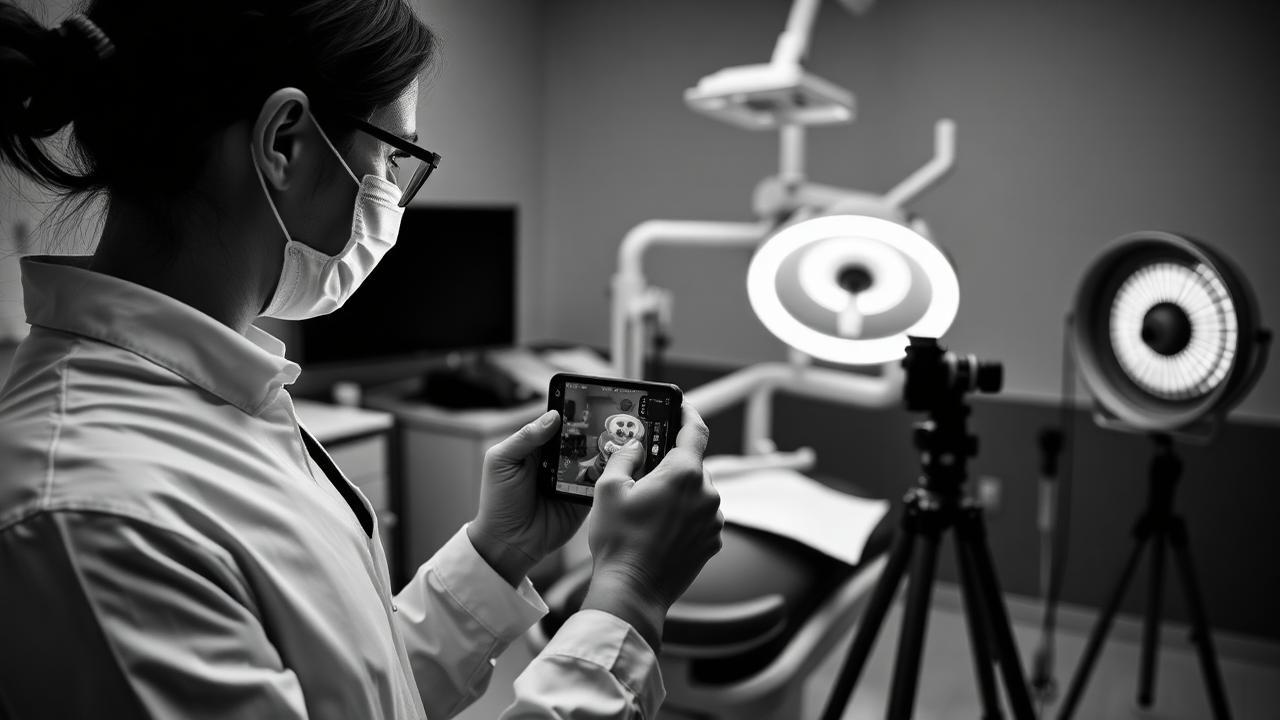
AI-edited content is fundamentally different. The raw material is real. A real doctor performing a real procedure in a real office with real patients (who consented). AI handles everything after the footage exists: scripting the hook, editing the clips, generating a voiceover in the doctor's cloned voice, adding timed captions, selecting music, applying branding, and publishing.
"It has to be original content. No AI generated, no stock. If you like AI generated content, this is not for you. This is for authentic work. That's why I created this agent," Artem S. explains.
The distinction matters because social media runs on trust. A dentist posting real procedure footage builds credibility with every video. A dentist posting AI-generated imagery of a fake office with fake patients builds nothing. The ai impact on social media is that production became instant, not that authenticity became optional.
How AI Understands Context Now
AI doesn't just edit anymore. It reads the room.
Early AI video editing was mechanical. Trim the clip. Add text. Overlay music. The output looked edited but felt generic. The hook didn't match the content. The caption was vague. The call to action was the same on every post regardless of what the video showed.
Modern AI social media editing understands context. This changes everything about how ai affects social media marketing.
When a medical practice sends a video of a teeth whitening procedure, the AI doesn't just see "dental video." It identifies the specific procedure. It recognizes the equipment. It knows whether there's blood or sensitive content that needs careful handling. It pulls information from the practice's website about how they describe this service, what they charge, and who their ideal patient is.
Then it makes decisions a human editor would need hours to research. What hook matches this content? What awareness stage is the most likely viewer at? Someone who's never heard of the practice needs an attention-grabbing hook focused on the problem ("Your teeth aren't as white as they used to be"). Someone who's already been to the website needs a conversion hook ("Here's what the process actually looks like").
"It will categorize your ideal audience on those who may not be familiar with your product yet but have a problem your product can solve. Depending on the content you send, it will decide whether to make this content for awareness, for conversion, or anything in between," Artem S. says.
This level of content intelligence was previously only available from experienced social media strategists who'd been working with a practice for months. AI now does it on the first video because it learned the practice's entire website in 60 seconds. The AI handles voice cloning so the doctor's actual voice narrates every video. It detects blood and medical devices in procedure footage. It recognizes whether the content is educational, testimonial, or procedural, and adjusts the edit accordingly. This isn't just faster editing. This is smarter editing, and that's how ai changing social media actually plays out in practice.
The Healthcare-Specific Shift
Medical practices couldn't do social media. Now they can. That changes the entire market.
Healthcare was the industry most locked out of social media. Not because doctors didn't want to post. Because the production requirements were too specialized and too expensive.
A restaurant can post a photo of today's special. A retail store can film a 15-second try-on. Healthcare content has layers of complexity that general content creators struggle with.
Medical terminology needs to be accurate. You can't call a dental implant a "tooth replacement screw" in a caption. Procedure footage contains blood, surgical sites, and exposed tissue that needs careful handling for platform compliance. Before-and-after content has specific regulations. Patient consent and HIPAA considerations add another layer.
These requirements meant that a social media manager working with a medical practice needed months of training before the content felt credible. Generic freelancers produced posts that made doctors cringe. Agencies charged premium rates for healthcare-specific knowledge. The math never worked for most practices.
AI built specifically for healthcare changes that math completely.
ReelsDoc scrapes a practice's website and learns their services, providers, and brand in 60 seconds. The AI recognizes procedures in video footage: extractions vs. implant placements vs. veneer bondings. It detects blood and sensitive content automatically. It uses correct medical terminology in captions and hooks. It understands which procedures target which patient demographics.
For dentists, this means a hygienist can film a scaling and the AI produces a post that accurately describes the procedure, uses proper terminology, and targets the right audience. No training period. No back-and-forth with an editor who doesn't know the difference between a crown prep and a veneer prep.
This is the healthcare-specific shift: the production barrier that kept medical practices off social media is gone. The practices that move first build months of content advantage that competitors can't easily close. If you want to see what this looks like for your specialty, check how it works for medical practices or for dental offices specifically.
What This Means for Social Media Managers
They're not replaced. Their job just changed.
If you're a social media manager reading this, here's the honest truth: AI is coming for the production part of your job. Not the strategy part. Not the relationship part. Not the community management part. The editing, formatting, captioning, and publishing part.
That's not bad news. It's a role change.
Think about what social media managers actually spend their time on. Content production eats 60-70% of the workweek. Filming, editing, writing captions, formatting for platforms, scheduling, publishing. The strategic work, which is the valuable work, gets squeezed into whatever time is left.
AI flips that ratio. When production is handled, social media managers become strategists. They decide what to film and why. They manage community engagement. They build relationships with local businesses and influencers. They handle the conversations in DMs that turn followers into customers. They manage reputation when a negative review blows up.
The social media manager partnership model is where this industry is heading. Smart managers are already adding AI editing to their services. They charge for strategy and relationship management while AI handles production. Their margins improve. Their clients get more content. Everyone wins.
The managers who resist this shift will find themselves competing on production speed against AI that works in minutes. That's not a competition worth having. The managers who embrace it will offer better service at better margins and handle more clients without burning out.
If you want to understand how this compares to the traditional model, read the full AI editor vs. social media manager comparison. And if you want to explore how to use AI editing within your own client work, the practical guide on how to use AI for social media marketing covers the workflow in detail.
The Economics Shift
The old model cost thousands and produced a handful of posts. The new model costs less than lunch and never stops.
Here's the math that explains why ai social media strategy adoption is accelerating.
Old model: human-dependent production. A social media manager costs $2,000-5,000 per month. Output: 8-20 posts per month. Turnaround: 2-5 days per post. Onboarding: 2-4 weeks before content matches your brand. Risk: they leave, and you start from zero.
A freelancer costs $500-1,500 per month. Output: variable quality, often generic. Training period: months before they understand your industry. And the content usually looks like Canva templates with stock photos.
Doing it yourself costs your time. If you're a doctor billing $300-800 per hour and spending 2 hours per week on editing, that's $2,400-6,400 per month in opportunity cost. And you'll quit within two weeks.
"You will be expecting ROI on that... social media is a long term strategy. You have to be consistent for months, if not years. And spending that much money... that's gonna be a short term relationship and you will give up at the end," Artem S. explains.
That cycle of spending, expecting fast results, and quitting is the reason most small businesses have abandoned social media accounts with the last post from 2022.
New model: AI-powered production. An AI social media editor like ReelsDoc costs less than lunch. Output: unlimited, constrained only by how often you film. Turnaround: under 5 minutes from raw to published. Onboarding: 60 seconds. Risk: none. The AI doesn't quit, burn out, or take vacations.
The economics aren't slightly better. They're a different category. A practice that films 3 clips a day can publish 3 finished posts a day, on four platforms, for less than the cost of a single post from a freelancer. This is what makes the ai impact on social media structural, not cosmetic. When the cost of production drops this dramatically, the entire strategy changes. You don't need to agonize over which 3 posts to publish this week. You publish everything worth filming and let the algorithm decide what resonates.
What AI Still Can't Do
Being clear about limits is how you know the rest is real.
AI cannot film your content. Someone at your practice needs to pick up a phone, hit record, and capture what's happening. A 30-second clip is enough. But the footage has to come from your real office, your real procedures, your real team. No AI on earth can create that.
AI cannot build genuine relationships. The comments section, the DMs, the local business partnerships, the community events. These are human territory. Social media is social. The relationship layer stays with people.
AI cannot handle a PR crisis. A negative review goes viral. A patient makes a public complaint. A sensitive situation requires careful, empathetic communication in real time. AI isn't equipped for that, and you wouldn't want it to be.
AI cannot replace real expertise. A board-certified dermatologist explaining why a treatment works carries authority that no script can replicate, no matter how well-written. The expertise is the content. AI just delivers it to more people.
AI cannot create trust without real content. This point is worth repeating. Trust on social media comes from seeing real people in real environments doing real work. AI production amplifies that trust by getting real content in front of more people, more consistently. But it cannot manufacture trust from synthetic material. These limits actually define why AI social media production works. By focusing on production and leaving authenticity, relationships, and expertise to humans, AI does the thing it's best at, fast and consistent editing, while humans do the things they're best at, being real and building trust.
Where This Is Heading
Every small business will have AI social media production within two years. The question is who gets there first.
The trajectory is clear. AI social media editing is following the same adoption curve as every business technology that works: early adopters get the advantage, the middle catches up, and the late majority scrambles.
Right now, we're in early adoption. Most businesses still haven't tried AI for social media production. They're either doing it manually, paying someone, or not doing it at all. The businesses adopting AI editing today are building a content library, an audience, and an algorithm advantage that compounds every month.
Within a year, AI social media production will be standard for forward-thinking businesses. The practices that started six months ago will have hundreds of posts, established audience trust, and strong algorithmic positioning. The ones just starting will be playing catch-up.
Within two years, not using AI for social media production will be like not having a website in 2015. Technically possible, but a clear competitive disadvantage.
The businesses that move now get something that can't be bought later: time. Six months of consistent daily content across four platforms builds an audience that a competitor starting from zero can't replicate with a single decision. They have to put in the same six months.
The ai social media strategy of the future isn't about choosing between human and AI. It's about the hybrid model: humans film, strategize, and build relationships. AI handles everything between the raw footage and the published post. Businesses that adopt this model first will own their local social media presence. The rest will wonder why they waited.
If you want to see what AI editing does with your actual content, try the free demo or send your first video to the demo bot. Five free videos. No credit card. Under five minutes from raw to published. That's how ai is changing social media strategy, and it starts the moment you try it.
FAQ
How is AI changing social media strategy for small businesses?
AI is changing social media strategy by eliminating the production bottleneck that prevented most small businesses from participating. Previously, going from raw footage to a published post required hours of skilled editing work or thousands of dollars in monthly retainers. AI compresses that into minutes. This means small businesses, especially healthcare practices, can now publish daily content across multiple platforms without hiring a social media manager, learning editing software, or spending significant money. The strategic shift isn't that AI makes posting easier. It's that AI makes consistent posting possible for businesses that couldn't afford the production pipeline before. The 99% of businesses that were locked out of effective social media now have a viable path in.
What's the difference between AI-generated content and AI-edited content on social media?
This distinction is critical and most people miss it. AI-generated content means AI creates videos, images, or avatars from scratch, synthetic faces, fake environments, fabricated footage. This content feels artificial, sits in the uncanny valley, and builds zero trust with audiences. AI-edited content starts with real footage from real people in real environments. The AI handles the production work: scripting hooks, editing clips, adding captions, generating voiceover in the creator's cloned voice, selecting music, and publishing. The source material is 100% authentic. The production is AI-powered. That's the line that separates content that builds trust from content that destroys it. If your AI social media approach uses generated imagery, you're just replacing stock photos with fancier stock photos.
Will AI replace social media managers?
Not entirely, but the role is changing significantly. AI is replacing the production layer of social media management: editing, captioning, formatting, and publishing. This represents roughly 60-70% of a social media manager's typical workweek. What AI cannot replace is strategy, community management, relationship building, crisis communication, and the human judgment needed for brand voice and audience engagement. The social media managers who will thrive are the ones who adapt to a hybrid model. They focus on strategy and relationships while AI handles production. Their value shifts from "person who makes posts" to "person who decides what to film and why, then manages the community around it." The managers who resist this shift will find themselves competing against AI on production speed, which is a losing proposition.
How does AI handle healthcare-specific social media content?
Healthcare content has unique requirements that general-purpose AI misses entirely. Specialized AI built for medical practices handles several critical areas: accurate medical terminology in captions and hooks, blood and sensitive content detection in procedure footage, procedure recognition (distinguishing an extraction from an implant placement from a veneer bonding), compliance awareness around patient consent and HIPAA, and website-informed context that pulls in the practice's actual services, providers, and brand language. For example, when a dentist sends a video of a dental implant procedure, AI built for healthcare identifies the specific procedure, uses correct terminology, adjusts the hook for the appropriate audience awareness stage, and handles any blood or surgical content appropriately. A generic video editing AI would just see "a medical video" and produce something that makes the doctor cringe.
How much does AI social media production cost compared to traditional methods?
The cost difference is dramatic. Traditional social media management runs $2,000-5,000 per month for a dedicated manager, or $500-1,500 for a freelancer with variable quality. Self-managing costs hours per week, which for a healthcare provider billing hundreds per hour, translates to thousands in opportunity cost. AI social media production through an editor like ReelsDoc costs less than lunch. But cost per month is only part of the equation. Consider cost per post: a social media manager producing 12 posts per month at $3,000 costs $250 per post. AI production costs a fraction of that, and there's no limit on volume. Film three procedure videos on a Tuesday and all three are edited and published the same day. The economics aren't incrementally better. They're categorically different, which is why this shift is happening so fast.
Is AI-edited social media content effective for patient acquisition?
Yes, when the source content is authentic. The effectiveness of social media content for patient acquisition depends on two factors: consistency and trust. AI addresses both. Consistency means showing up in feeds regularly across multiple platforms, which the algorithm rewards with increased reach. AI makes daily publishing sustainable because production takes minutes instead of hours. Trust comes from seeing a real doctor in a real office performing real procedures. AI doesn't change what's in the video. It changes how quickly and professionally that video gets from a camera roll to a published post. The combination of authentic footage and consistent publishing is what drives patient acquisition. Practices posting daily real content outperform practices posting weekly polished content because the algorithm favors frequency and audiences favor authenticity.