How to Use AI for Social Media Marketing (What Actually Works in 2026)
AI can run your social media now. But not the way most people think.
The conversation about how to use AI for social media marketing has gotten loud. Every week there's a new headline about AI-generated content, AI avatars, AI influencers. Most of it misses the point entirely.
Here's what's actually happening: businesses, especially healthcare practices, are quietly replacing their entire social media production pipeline with AI. Not with fake content. Not with AI-generated faces or synthetic stock footage. With AI that takes their real videos, their real photos, their real procedures, and turns them into finished, published posts across every platform.
The shift isn't about generating content. It's about producing it. The raw material already exists in every practice, every office, every camera roll. What was missing was the ability to go from raw footage to published post without hiring a team, learning software, or spending hours editing.
That problem is solved now. This guide covers how ai social media marketing works in 2026, what it can and can't do, and how to start using it whether you're a solo practitioner or a multi-location group.
The Shift: From Hiring Humans to Using AI for Social Media Production
Businesses aren't replacing creativity. They're replacing the production bottleneck.
For the last decade, social media marketing for businesses followed one path: hire someone. A social media manager, a freelancer, an agency. Pay them monthly. Wait for content. Approve it. Hope it works. Replace them when it doesn't.
The problem was never strategy. Every dentist, every plastic surgeon, every medspa owner knows they should be on social media. They see competitors gaining followers and booking patients from TikTok and Instagram Reels. The problem was always production.
Getting a 45-second procedure video from a phone camera to a published Reel with a hook, captions, music, voiceover, and branding takes work. Real work. Someone has to edit it. Someone has to write the caption. Someone has to pick the right format for each platform. Someone has to actually publish it. Multiply that by 3-5 posts per week across 4 platforms and you have a part-time job.
That's the bottleneck AI is solving. Not the strategy. Not the creativity. The actual production.
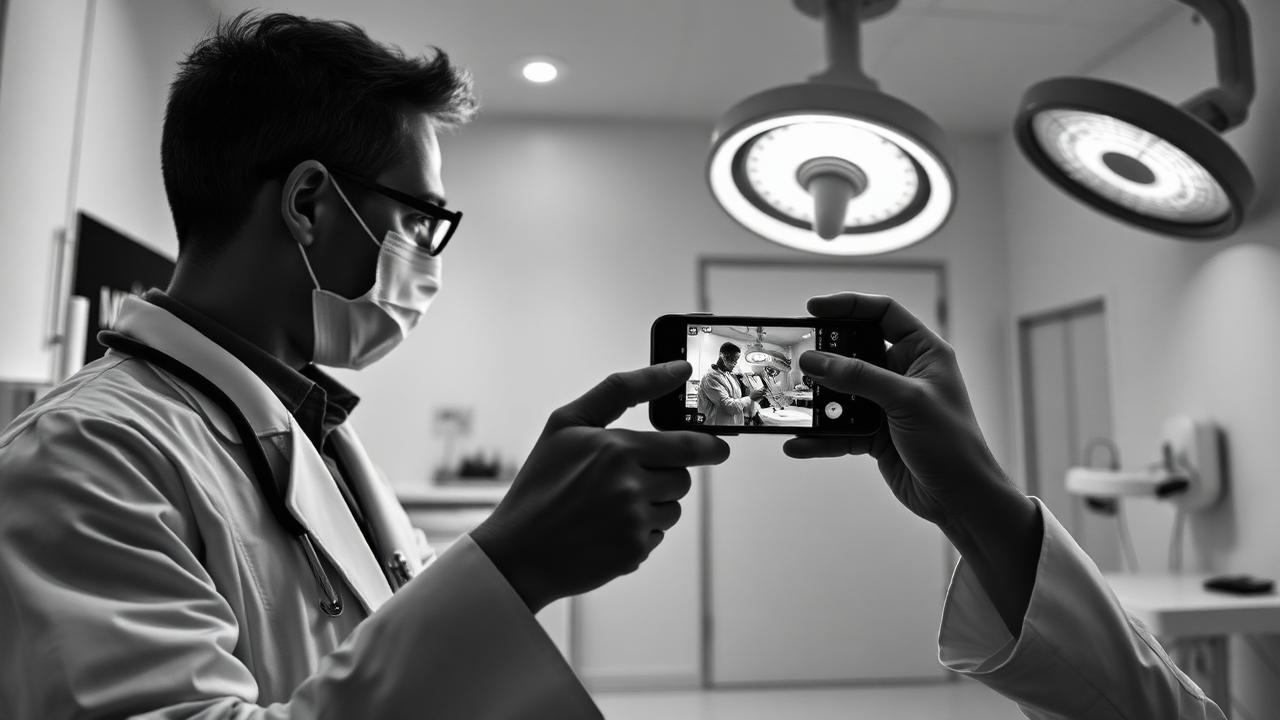
In 2026, the shift looks like this: a doctor films a 90-second clip of a procedure on their phone. They send it to an AI. Within minutes, they get back a fully edited video with a scroll-stopping hook, professional captions, background music, and a voiceover that sounds like them. It publishes to TikTok, Instagram, YouTube Shorts, and Facebook simultaneously.
No editing software. No back-and-forth with a freelancer. No two-week turnaround. The footage goes in raw and comes out ready.
This is what using ai for social media actually looks like when it works.
What AI Can Actually Do for Social Media in 2026
This is real, not hype. Here's what's possible right now.
AI video editing. Raw footage goes in, edited clips come out. AI identifies the most engaging moments, cuts dead air, adds transitions, and creates clips optimized for short-form platforms. For healthcare, this includes recognizing procedures, identifying before-and-after moments, and detecting sensitive content like blood that needs careful handling.
Hook writing. The first 2-3 seconds determine whether someone watches or scrolls. AI writes hooks based on what the video actually shows, not generic templates. A clip of a dental implant placement gets a different hook than a Botox injection or a patient testimonial. The AI reads the content and matches the hook to the awareness stage of the viewer.
Voiceover generation. Record your voice once. AI creates a voice clone that narrates your videos in your tone, your cadence, your style. This means a doctor can send raw footage without speaking on camera and still have "their" voice explaining the procedure. It's the doctor's actual voice, cloned from a sample. Not a robotic text-to-speech output.
Caption and subtitle creation. AI generates accurate, timed captions that overlay on the video. This isn't just transcription. It's styled, positioned, and timed to match the pacing of the edit. For healthcare content, this includes correct medical terminology and procedure names.
Multi-platform publishing. One video gets formatted and published to TikTok, Instagram Reels, YouTube Shorts, and Facebook simultaneously. Different aspect ratios, different caption formats, different posting requirements. AI handles all of it.
Content intelligence. AI that's been trained on your practice understands your services, your providers, and your brand. When you send a video of a teeth whitening procedure, it knows you offer Zoom whitening, it knows the price range you've published on your website, and it knows how to speak to someone who's considering it. This isn't generic. It's contextual.
Audience awareness matching. A video meant for someone who's never heard of your practice needs a different hook than one meant for someone who's already visited your website. AI adjusts the messaging based on where the viewer sits in the awareness spectrum. Top-of-funnel content gets attention-grabbing hooks. Bottom-of-funnel content gets conversion-focused framing.
What AI Can't Do (And You Shouldn't Want It To)
Being honest about limits makes the rest more believable.
AI cannot show up at your office with a camera. Someone on your team still needs to film. A 30-second phone clip is all it takes, but it has to come from your practice, your procedures, your office.
As Artem S., CEO of Doctor Rank and creator of ReelsDoc, puts it: "How would you show it through AI generated videos? That will not work. It's just another replacement for stock."
AI cannot replace genuine expertise. A periodontist explaining why a patient needs bone grafting before implant placement carries authority that no AI script can replicate. The expertise has to be real. AI just makes it easier to get that expertise in front of people.
AI cannot handle crisis communication. A negative review that goes viral, a patient complaint on social media, a sensitive PR situation. These require human judgment, empathy, and real-time decision making. AI is for production, not for reputation crises.
AI cannot build relationships. Responding to comments, engaging with other local businesses, showing up to community events and posting about them in the moment. The relationship layer of social media stays human.
And here's the most important one: AI-generated content doesn't work. Fake videos with AI-generated doctors, synthetic stock footage made to look real, AI avatars pretending to be your practice. Patients can tell. It feels off. It builds zero trust.
"It has to be original content. No AI generated, no stock. If you like AI generated content, this is not for you. This is for authentic work." That's the line ReelsDoc draws. The AI edits your real content. It doesn't create fake content to replace it.
The Four Levels of AI in Social Media Marketing
Not all AI social media content creation is equal. Here's how to think about it.
Level 1: AI writes your captions. This is where most businesses start. You use ChatGPT or Claude to write Instagram captions and hashtags. It saves 20 minutes per post. It's helpful, but it solves maybe 10% of the production problem. You still need to edit the video, design the post, and publish it yourself.
Level 2: AI edits your video. Desktop tools like Opus Clip, Descript, and CapCut's AI features can take long videos and cut them into short clips. This is a real step up. But these are still software you have to learn, workflows you have to manage, and outputs you have to manually publish. For a busy doctor or practice manager, "just use this editing software" is still a big ask. There's a learning curve, a time investment, and no one holding the production pipeline together.
Level 3: AI manages your production pipeline. This is where ai for social media marketing gets interesting. You send raw footage. AI handles scripting, editing, voiceover, captions, music, branding, and publishing. You don't open an app. You don't learn a timeline. You don't drag and drop clips. The entire production process happens without you touching editing software.
This is where ReelsDoc sits. The workflow is simple: you open Telegram, send your raw footage, and the AI handles everything else. As Artem S. explains: "You send up to 10 files. You can send photos, videos in a mix. Our AI agent will find the relevance, predict what you want to do with it, who it's for, and edit the videos on the back end."
Level 4: AI runs your entire social media strategy. This doesn't exist yet, and anyone claiming it does is selling you something. Full strategy, including what to film, when to film it, how to respond to trends, and how to adjust based on performance, still requires human judgment. AI is getting better at suggesting content ideas, but the strategic layer remains human for now.
Most businesses are stuck at Level 1 or 2. The jump to Level 3 is where the economics and consistency change dramatically.
Why AI Works Especially Well for Healthcare Social Media
Medical content has unique requirements. General AI misses them. Specialized AI doesn't.
Healthcare social media isn't like posting for a restaurant or a clothing brand. There are specific challenges that make general-purpose AI fall short.
Medical terminology. AI that edits a dental implant video needs to know the difference between an abutment and a crown. It needs to use the right procedure names in captions and hooks. General video editing AI doesn't have this context. An AI built for healthcare does.
Blood and sensitive content detection. Procedure videos often contain blood, surgical sites, and exposed tissue. AI needs to handle this intelligently: knowing when to include it (it makes for compelling content), when to blur or cut around it (platform compliance), and how to frame it (patients are fascinated, not disgusted, when it's presented correctly).
Procedure recognition. When a dentist sends a video, AI that understands dental procedures can identify whether it's an extraction, an implant placement, or a veneer bonding. This changes the hook, the caption, the target audience, and the voiceover script. A generic AI just sees "a medical procedure."
Compliance awareness. Healthcare content operates under different rules. Patient consent, HIPAA considerations, before-and-after claims. AI built for medical practices understands these boundaries. It won't make claims you can't support or use language that crosses compliance lines.
Website intelligence. ReelsDoc scrapes your practice website and learns your services, your providers, and your brand positioning in 60 seconds. When the AI edits a video of a specific treatment, it already knows whether you offer that treatment, what you call it on your website, and how to describe it in a way that matches your existing messaging.
This specialization is why a dentist or medical practice gets better results from an AI social media editor built for healthcare than from a general-purpose video tool that treats every video the same way.
How Businesses Are Actually Using AI for Social Media Right Now
The real workflow, not the theoretical one.
Here's what using ai for social media looks like in practice for a healthcare business using ReelsDoc:
The Telegram workflow. No app to download. No dashboard to learn. You open Telegram, tap a link, and you're set up in 60 seconds. "You get a link, you tap the link, you get approved right away, you get credits. It will be a dedicated agent for your practice... It's gonna be connected with your website and it will learn what kind of products, services, or treatments you provide. In 60 seconds," Artem S. explains.
"I know how much people, business owners, doctors, lawyers, they use so many apps on their phone, so many tools, CRMs. And between all of them, the last thing you need is another software, complicated software." That's why the entire experience lives inside a messaging app you already have.
Send raw footage. A hygienist films a scaling procedure. A front desk staff member films a patient testimonial. A doctor records a quick explanation of a treatment. They send the clips directly in Telegram. Photos, videos, mixed together. Up to 10 files at once.
AI processes everything. The AI identifies what's in the footage, writes the hook, generates a voiceover in the doctor's cloned voice, adds captions, selects music, applies branding, and creates the final edit. All behind the scenes.
Review or skip. You can preview the finished video and approve it. Or you can turn on Express mode and let it publish directly without review. Your choice.
Publish everywhere. One tap and the video goes to TikTok, Instagram, YouTube Shorts, and Facebook. Formatted correctly for each platform. Posted to your connected accounts.
Team access. Up to 5 staff members can access the same bot. The front desk can send footage. The office manager can review. The doctor can approve. Everyone uses the same Telegram thread.
The whole process, from raw footage to published content on 4 platforms, takes under 5 minutes.
The Economics: AI vs. Human for Social Media Production
The math isn't even close.
Hiring a social media manager: $2,000-5,000/month. You get 8-20 posts per month. Professional quality if you hire well. But there's a 2-4 week onboarding period. A 2-5 day turnaround per post. Constant back-and-forth on approvals. Sick days, vacations, turnover. When they leave, you start over.
Hiring a freelancer or overseas editor: $500-1,500/month. Quality varies wildly. They don't understand your practice, your procedures, or your local market. Months of training before the content feels right. And the output is usually generic: Canva templates and stock photos that look like every other practice in your city.
Doing it yourself: your time. If you're a doctor billing $300-800 per hour, spending 2 hours per week on social media editing costs your practice $2,400-6,400 per month in opportunity cost. And you'll quit within two weeks when the schedule fills up.
Using an AI social media editor: less than lunch. ReelsDoc costs less than what you'd spend on a lunch out. You get unlimited consistency, instant turnaround, zero onboarding, and published content on 4 platforms. The AI doesn't take vacation. It doesn't have a learning curve for your practice (it learns your website in 60 seconds). And it doesn't require you to open editing software.
Compare the output: a social media manager might deliver 12 posts per month. An AI editor lets you publish every time you film something. Three procedure videos on a Tuesday? Three published posts by the end of the day, across all platforms.
The question isn't whether you can afford AI social media marketing. It's whether you can afford not to use it when your competitors already are. See how ReelsDoc compares to a traditional social media manager for a full breakdown.
How to Start Using AI for Your Practice's Social Media
You can be publishing content today. Here's how.
Step 1: Film what you already do. You don't need to create anything new. Film a procedure you're doing today. Record a 30-second explanation of a treatment. Take before-and-after photos. The content exists in your practice every single day.
Step 2: Try it with real footage. ReelsDoc offers 5 free videos through the demo bot. Send your actual footage and see what comes back. No credit card. No onboarding call. No sales pitch. Just send a video or photos and get a finished edit.
Step 3: Set up your dedicated bot. Once you've seen the output, getting your own dedicated AI agent takes 60 seconds. It connects with your website, learns your services, your providers, and your brand. From that point forward, every video you send gets edited in the context of your practice specifically.
Step 4: Get your team involved. Add up to 5 staff members. Anyone who films can send footage directly. The office manager or marketing coordinator can handle reviews. The doctor only needs to approve if they want to.
Step 5: Turn on multi-platform publishing. Connect your TikTok, Instagram, YouTube, and Facebook accounts. Every approved video publishes everywhere at once.
Step 6: Build the habit. The practices that get results are the ones that film something every day. It doesn't need to be perfect. A shaky phone video of a real procedure, edited by AI with professional hooks and captions, outperforms a polished stock photo post every time. Consistency is what wins, and AI removes every excuse for inconsistency.
The shift from human-dependent social media to AI-powered production is happening right now. The practices that adopt it first will have months or years of content advantage over the ones that wait.
You don't need to figure out how to use ai for social media marketing on your own. The infrastructure exists. It works. And it takes less than five minutes to see it for yourself.
FAQ
Can AI really edit videos well enough for professional social media content?
Yes, but with an important distinction. AI that generates fake videos from scratch produces content that feels artificial and performs poorly. AI that edits real footage, meaning your actual procedure videos, your real before-and-afters, your genuine patient interactions, produces professional-grade output that outperforms most human-edited content. The reason is consistency. AI applies the same quality of hook writing, caption timing, music selection, and formatting to every single video. A human editor has good days and bad days. AI delivers the same standard every time. For healthcare practices specifically, AI editors built for the medical space handle terminology, procedure recognition, and sensitive content in ways that general editing tools simply can't.
Is AI-generated social media content authentic enough for healthcare?
This is the right question, and the answer depends on what you mean by "AI-generated." If you mean AI creating fake videos of doctors who don't exist, performing procedures that never happened, then no. That content destroys trust and patients can spot it immediately. But if you mean AI taking your real footage and producing a finished, polished edit with hooks, captions, voiceover in your cloned voice, and music, then yes. The authenticity comes from the source material. Your real office, your real team, your real procedures. AI just handles the production. The content is 100% authentic because it's your content. AI is the editor, not the creator.
How is using AI for social media different from using tools like Canva or CapCut?
Canva and CapCut are design and editing software. You still need to open the application, learn the interface, make creative decisions, build the edit manually, export it, and then publish it yourself to each platform one at a time. AI social media production removes all of those steps. You send raw footage and get back a published post. There's no interface to learn, no timeline to manage, no export settings to configure. For busy healthcare providers, this distinction matters enormously. The difference between "here's a tool you can use to edit" and "send me your footage and I'll handle everything" is the difference between another task on your list and a task that's already done.
How much time does AI social media marketing actually save?
A typical social media post, from raw footage to published content on multiple platforms, takes 45 minutes to 2 hours when done manually. That includes editing, writing captions, formatting for each platform, and publishing. With an AI social media editor like ReelsDoc, the same process takes under 5 minutes of your time: send the footage, review the output (optional), and approve. If you're posting 4 times per week, that's 12-32 hours per month saved. For a healthcare provider whose chair time is worth hundreds per hour, the math is significant. But time saved is only part of it. The bigger gain is consistency. Practices that use AI publish more frequently because the production friction is gone. More content means more visibility, more patient trust, and more appointments booked from social media.
Do I need to be on all four platforms (TikTok, Instagram, YouTube, Facebook)?
You don't need to be, but you should be. Each platform reaches a different audience. TikTok drives discovery among younger demographics. Instagram is where patients check you out before booking. YouTube Shorts captures search-driven intent. Facebook reaches the 35-55 demographic that books the most elective healthcare procedures. When AI handles the production and publishing, there's no extra effort to be on all four. One video, sent once, gets formatted and published to each platform automatically. The question of "which platforms should I be on" only matters when publishing to each one is a separate task. When it's automated, the answer is all of them.