
Social Media Marketing Strategies for Doctors: What Actually Works
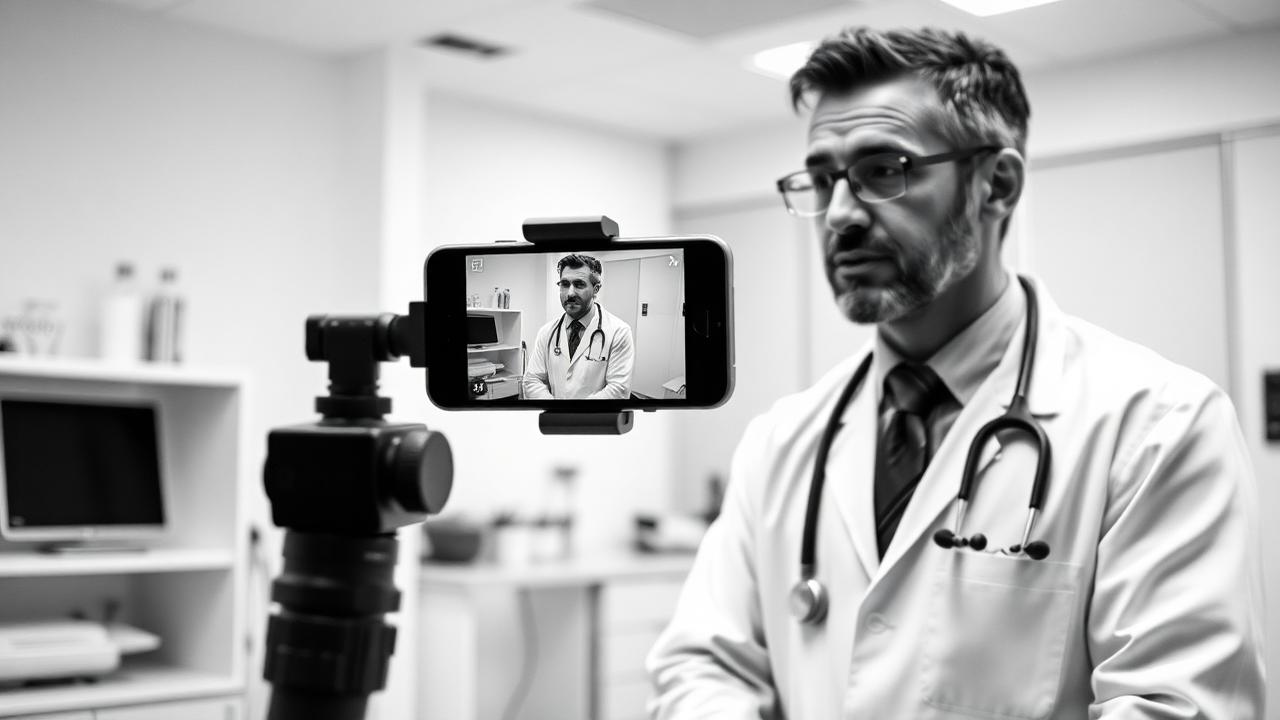
You don't need a complex social media strategy. You need the right one.
Every doctor knows social media matters. Patients check your Instagram before they call. They watch TikToks about procedures they're considering. They Google your name and expect to find a real person, not a blank profile with a stock photo logo.
But knowing social media matters and having a strategy for it are two different things. Most doctors don't have a strategy. Not because they don't care. Because nobody taught them one in medical school, nobody has time to figure one out between patients, and every "social media guru" makes it sound like a full-time job.
It's not. The social media marketing strategies for doctors that actually work are simple. Film what you already do. Post it consistently. Let the algorithm find your patients. That's it. This post breaks down exactly how.
Why Most Doctors Don't Have a Social Media Strategy
Three reasons. All fixable.
No time. This is the real one. As Artem S. puts it: "Those people who own small businesses or clinics or are doctors, the owners, they don't have time. They see patients, they're doing the work." You're in the office 10 hours a day. When you get home, the last thing you want to do is edit a video. Social media falls to the bottom of the list because your patients are at the top. That's the right priority. But it means social media never happens unless someone removes the production work from your plate.
Not knowing where to start. Which platform? What type of content? How often? Should you hire someone? Should you do it yourself? The number of decisions between "I should be on social media" and "I posted something" is enough to freeze anyone. Analysis paralysis is real, and it kills more doctor social media strategies than bad content ever does.
Thinking you need to go viral. This is the myth that stops doctors before they start. You see influencer physicians with millions of followers and think that's the game. It's not. You don't need millions of views. You need the right 200 people in your area to see your content. That's how you get patients, not fame.
The Only Strategy That Works for Doctors
Original content. Consistency. The algorithm handles targeting.
Here's the doctor social media strategy that works in 2026. It's three things.
Film what you already do. You perform procedures every day. You explain treatments to patients every day. You see results every day. That's all content. You don't need to create anything new. You need to capture what's already happening and put it online.
Post it consistently. Not once a month. Not a burst of five posts followed by silence. Consistently. Three to five times a week, every week. The algorithm rewards accounts that show up predictably. Your audience learns to expect you. Momentum builds.
Let the algorithm do the targeting. This is the part most doctors miss. You don't need to figure out how to reach the right patients. The algorithm already does that. "You don't need lots of views, you don't need to go viral to get a client. If you showcase the exact problem, the algorithm will show this to the person who has that problem." Post a video about knee replacement recovery, and the algorithm shows it to people researching knee replacement. Post about Botox, and it reaches people considering Botox. "It will categorize your ideal audience on those who may not be familiar with your product yet but have a problem your product can solve."
That's the entire strategy. Everything else, the platform choices, the posting schedule, the content types, is just execution detail. The core is simple: real content, posted regularly, and the algorithm handles the rest.
7 Content Types That Work for Doctors
You already have all of these. You just need to film them.
1. Procedure clips. Film what you do every day. A staff member holds a phone during a procedure. 30 seconds to 2 minutes of raw footage. Patients are fascinated by medical procedures. The same injection you do ten times a week is content someone has never seen before. This is the highest-performing content type across every medical practice we've worked with.
2. Doctor talking to camera. You explaining a condition, a treatment option, or what to expect from a procedure. Sixty seconds, no script, just you talking. This builds trust faster than anything else. Patients want to hear their doctor before they book. A quick clip of you explaining recovery from a procedure is worth more than 50 stock photo posts.
3. Patient education. What to expect at a first visit. How to prepare for surgery. When to see a specialist. Signs of a condition to watch for. These are the questions your patients Google every day. Create content that answers them. Now patients find you answering their exact question on social media.
4. Before-and-after results. Two photos or a short video showing the outcome. This is the most shareable content in medical social media. People tag friends, save the post, send it to someone considering the same treatment. Works for any specialty that has visible results.
5. Team content. Staff introductions, behind-the-scenes, new equipment, office celebrations. This content humanizes your practice. It makes a patient feel like they know your team before they walk in the door. Trust starts before the appointment.
6. Q&A from common patient questions. Take the questions you answer five times a week in the office and answer them on camera. "How long does recovery take?" "Does this hurt?" "How do I know if I need this?" Every question is a video. Every video reaches someone asking that exact question.
7. Office tours. Walk through your space. Show the waiting room, the treatment rooms, the technology. Patients want to know what to expect. A 30-second office tour removes the unknown and makes booking easier.

Platform Strategy
Which platform does what. And why you should be on all of them.
TikTok: Discovery. This is where new patients find you. TikTok's algorithm is the most aggressive at showing your content to people who don't follow you yet. A procedure video from your office gets pushed to people in your area who've been watching medical content. Even with zero followers, your first video can reach hundreds of the right people.
Instagram: Credibility. This is what patients check before they book. They Google your name, find your Instagram, and scroll. If your last post was three months ago, that's a red flag. If your feed shows real procedures, real results, and regular activity, that's a green light. Instagram is your digital waiting room.
YouTube: Search. "What to expect during knee replacement" or "How long does Botox last" are queries people type into YouTube. YouTube Shorts gets discovered through search and recommendations. This is long-tail social media for physicians, where content keeps working for months after you post it.
Facebook: Demographics. The 35-55 demographic that books the most medical appointments is on Facebook. Parents looking for a family doctor, adults considering elective procedures, patients with insurance searching for a provider. Don't ignore Facebook because it feels outdated. Your highest-value patients are scrolling it right now.
The cross-posting advantage. One video goes on all four platforms. Same footage, same message, different audiences. A 30-second procedure clip reaches a younger audience on TikTok, credibility-checking patients on Instagram, searchers on YouTube, and the older demographic on Facebook. Film once, publish everywhere.
How Often and When to Post
Consistency beats volume. Volume helps too.
Three posts a week is the minimum for any social media strategy for doctors to work. Five is better. Daily is ideal if you can sustain it.
But here's the part nobody says: ten posts in one week followed by nothing for a month is worse than two posts a week every week. The algorithm rewards consistency. It learns your posting pattern and adjusts how much it promotes your content based on whether you keep showing up.
The best time to post varies by platform and audience. But the honest answer: it matters less than you think. A great video posted at 2 PM on a Tuesday outperforms a mediocre post timed perfectly for "peak engagement hours." Focus on the content first. Optimize the timing later, if ever.
The real question isn't "when should I post?" It's "can I keep posting?" If the answer is yes, the strategy works. If the answer is "only for two weeks until I get busy," the strategy will fail no matter how good the content is.
What Not to Do
Stop doing these things immediately.
Stock photos. A smiling model in a white coat with a stethoscope. "Your health is our priority" in serif font. Nobody engages with this. Nobody books from this. It makes your practice look like every other generic medical page online. Patients see through it instantly.
Canva templates. Pastel backgrounds with "Did you know?" health tips. These were acceptable in 2019. The algorithm now prioritizes video. Static graphics with template designs get buried. You're spending time creating content that nobody sees.
Copying influencers. Physician influencers have production teams, hours to create content, and different goals than a practicing doctor. Their format doesn't apply to you. You don't need trending dances or comedy sketches. You need real footage from your practice, posted consistently. That's it.
Buying followers. Fake followers don't book appointments. They destroy your engagement rate, which makes the algorithm show your content to fewer real people. A doctor with 300 real local followers outperforms one with 15,000 bought followers every time.
Posting once a month. Worse than not posting at all. It signals to patients and the algorithm that you've given up. If someone checks your page and sees a post from three months ago, they're booking with the doctor who posted yesterday.
Waiting for perfection. The video doesn't need to be perfect. The lighting doesn't need to be professional. The caption doesn't need to be clever. A slightly shaky real video from your office outperforms a perfectly polished stock production. Every day you wait for "perfect" is a day your competitor posts something real.
The Time Problem and How to Solve It
Separate filming from production. That's the entire answer.
This is where every doctor social media strategy dies. Not at the strategy level. At the execution level. You know what to post. You know how often. You know which platforms. But you don't have time to edit videos, write captions, pick music, add voiceover, and publish to four platforms.
And here's the reality: "People consider them like local celebrities. But how many of these businesses actually make it? It's top 1 or 2% only. So what do the rest of the businesses do? Nothing." Most doctors do nothing because the production bottleneck is too wide. The gap between "I have footage on my phone" and "it's a published post on four platforms" requires hours of work that a practicing physician simply doesn't have.
The solution is to separate the two jobs:
Job 1: Filming. This takes 30 seconds. A staff member holds a phone during a procedure. You talk to the camera for a minute between patients. Someone snaps a before-and-after photo. This is the part only you and your team can do. It's fast and it happens during work you're already doing.
Job 2: Production. Editing, scripting, voiceover, captions, music, branding, publishing. This is the part that takes hours and kills consistency. This is the part you need to remove from your plate entirely.
A social media manager costs $2,000-5,000 a month and still takes days to turn footage around. An overseas freelancer gives you generic output. Doing it yourself costs you chair time worth far more than any social media hire.
The alternative: AI handles production. You send raw footage. The AI edits it, writes the hook, adds voiceover, layers captions and music, and publishes to TikTok, Instagram, YouTube, and Facebook. Your involvement: send the clip, approve the result. Under 5 minutes.
"You can share this agent with any of your staff. They get it on their phone and they can submit videos themselves. Every single staff member in your business becomes a social media expert." That's how ReelsDoc works for doctors. Not as an app to learn. Not as a dashboard to manage. As a Telegram chat where anyone on your team can send footage and get a published post back in minutes.
Getting Started
The simplest path from zero to consistent social media.
If you're starting from scratch or restarting after months of silence:
Step 1: Film one thing today. A procedure, a before-and-after, you talking about a condition for 30 seconds. Don't overthink it. Just capture something real.
Step 2: Post it. Pick one platform. TikTok or Instagram. Post the video. Don't wait for a perfect caption. Don't wait for the right time. Just post it.
Step 3: Do it again tomorrow. And the next day. Build the habit of filming and posting before you worry about strategy, analytics, or optimization. The habit is the strategy.
Step 4: Remove the bottleneck. Once you've proven you can film consistently, stop doing the production yourself. Hand the editing, captioning, and publishing to a system that doesn't depend on your free time or motivation.
Step 5: Scale to all platforms. One video, four platforms, every time. TikTok, Instagram, YouTube, Facebook. Different audiences, same content.
Or skip steps 1 through 4. Send a video or photos to ReelsDoc right now. Get back a fully produced, published-ready post in under 5 minutes. Five free videos, no credit card, no onboarding.
Frequently Asked Questions
What are the best social media marketing strategies for doctors?
Film original content from your practice, post it consistently three to five times a week, and publish to multiple platforms. The algorithm shows your content to people in your area who have the problems you solve. Consistency and original footage beat production value and posting frequency bursts every time. The doctors who succeed on social media are the ones who show up predictably, not the ones who post the most polished videos.
Which social media platform is best for doctors?
TikTok for discovering new patients, Instagram for credibility and pre-booking research, YouTube for search-driven content that works for months, and Facebook for the 35-55 demographic. If you can only pick one, start with Instagram or TikTok. If you can post to all four simultaneously, do it.
How often should doctors post on social media?
Three to five times per week minimum. Consistency matters more than volume. Two posts every week for a year outperforms daily posting for two weeks followed by silence. The algorithm rewards accounts that post predictably, and patients trust practices that show up regularly.
Do doctors need to hire a social media manager?
Not necessarily. A social media manager runs $2,000-5,000 per month and still requires your time for approvals and direction. An AI-powered approach like ReelsDoc for doctors handles editing, voiceover, captions, and publishing from raw footage for less than lunch per day. The right choice depends on your budget and how much involvement you want.
What kind of social media content works best for doctors?
Procedure clips, doctor-to-camera explanations, before-and-after results, patient education, Q&A from common patient questions, team content, and office tours. All of it comes from what you already do every day. The best-performing content is always real footage from your actual practice, not stock photos or templates.
Your patients are already on social media. The question is whether they find you or your competitor.
Film something at your practice tomorrow. Send the raw footage to ReelsDoc. Get back a finished video, published to four platforms, in under 5 minutes. Five free videos. No credit card. No app to download. Just Telegram.