Social Media Content for Dentists: What to Film, What to Post, and Why You Already Have Enough
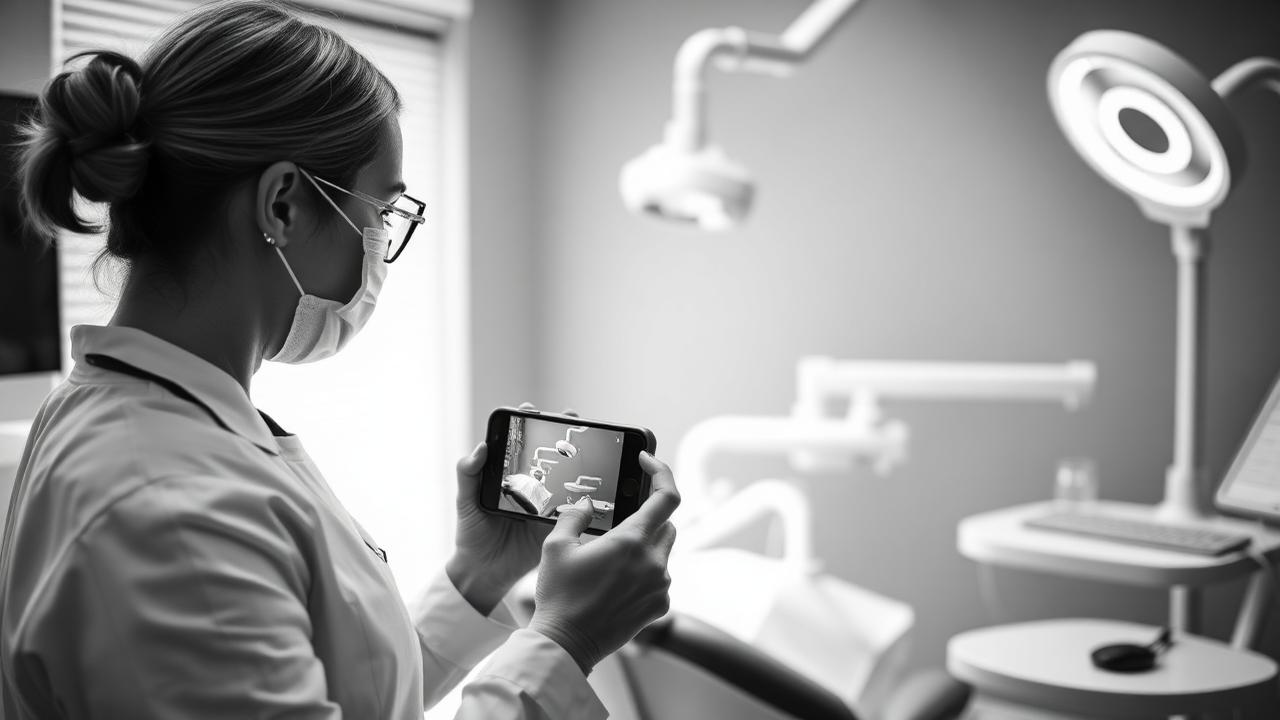
You're not missing content ideas. You're missing a camera.
Every dental practice in the country sits on more content than a full-time social media team could ever post. Every procedure, every patient question, every before-and-after, every new piece of equipment, every morning huddle. It's all content. You just haven't been filming it.
This isn't a social media strategy guide. If you want platforms, algorithms, and marketing theory, read the complete social media marketing guide for dentists. This is a content guide. What to film. What works. What doesn't. How to look at your daily schedule and see a week's worth of posts instead of just appointments.
The practices that win on social media aren't the most creative. They're the ones that realized their office is a content studio. Every day.
You're Sitting on a Goldmine
Every day in your office produces more content than you could ever post.
Think about what happened at your practice today. You placed a crown. You did a cleaning. You took impressions for Invisalign. A patient asked about whitening. Your hygienist explained flossing technique to a nervous teenager. Your front desk handled a question about insurance.
That's six posts. Minimum.
Most dentists look at social media and think they need to come up with content ideas. They open a blank screen, stare at it, and close the app. But you don't need ideas. You need to recognize that the ideas are already happening around you, every single hour of every workday.
A dental implant placement is a video. A whitening result is a before-and-after post. A patient question about recovery time is an educational clip. Your team decorating the office for the holidays is a behind-the-scenes moment. You're not starting from zero. You're starting from everything.
The shift isn't creative. It's perceptual. Once you start seeing your day through the lens of "what could be filmed," you won't run out of dental social media content. You'll have the opposite problem: too much raw material and not enough time to post it all.
The 10 Content Types That Work for Dental Practices
A detailed breakdown with examples for each.
Not all content performs the same. These ten types are what actually get views, engagement, and new patient inquiries for dental offices. They're listed roughly by impact.
1. Procedure Videos
This is the highest-performing dental social media content, period. Patients are fascinated by dental procedures. They can't look away. Implant placements, root canal treatments, extractions, deep cleanings, crown preparations. Film them.
As Artem S. puts it: "Let's say you're a dentist, you're shooting a procedure, a root canal or dental implants. Somebody can just hold the camera while you're explaining what you're doing. Two minute procedure, maybe they cut the clip, start recording again from a different angle."
That's it. No scripting. No storyboarding. Just a staff member with a phone, pointed at the procedure, while you explain what's happening. Two minutes of raw footage becomes a 30-second post that hundreds of people in your area will watch.
Examples: Implant placement from drill to abutment. Wisdom tooth extraction. Laser gum treatment. A cleaning on a patient who hasn't been in three years.
2. Before-and-After Transformations
This is the content that gets saved, shared, and sent to friends. Invisalign results. Whitening transformations. Veneer placements. Full smile makeovers. Two photos side by side, or a reveal video.
The emotional impact is immediate. Someone scrolling sees a smile they relate to, then sees what it became. They tag a friend. They DM the post to their partner. They save it for later. Before-and-after content has the longest shelf life of any dental content type because people return to it when they're ready to book.
Examples: Invisalign journey (Day 1 vs. Day 365). Single veneer placement. Whitening result on a coffee drinker. Full mouth restoration.
3. Dentist Talking to Camera
You, looking at the camera, answering a question or explaining a treatment. This is the content that builds trust fastest. Patients want to see and hear their dentist before they book. They want to know your communication style, your demeanor, whether you seem like someone they'd feel comfortable with.
Sixty seconds of you explaining what happens during a root canal is worth more than twenty stock photo posts. You don't need a script. Answer the question the way you'd answer it in the operatory. That directness is the whole point.
Examples: "What should you do if a tooth gets knocked out?" "Why I recommend dental implants over bridges." "The one thing I wish every patient knew about flossing."
4. Patient Education
What to expect during your first visit. How long Invisalign treatment takes. Signs you might need a root canal. What to eat after an extraction. How dental insurance actually works.
These are the exact questions people type into TikTok and Instagram search bars. When your content answers those questions, the algorithm shows it to the people searching. This is how you show up for patients who don't even know your practice exists yet.
Examples: "5 signs you need a dental crown." "What to expect during a deep cleaning." "How to prepare for wisdom tooth removal." "What dental insurance actually covers."
5. Behind-the-Scenes and Office Life
New equipment arrivals. Office tours. The team grabbing coffee before the first patient. Setting up for the day. Unboxing new supplies. Decorating for a holiday.
This content humanizes your practice. People don't choose a dental office. They choose a group of people they feel comfortable with. When they see your team joking around in the morning, or your assistant dancing while setting up a room, they feel like they know you. That feeling is what turns a follower into a patient.
Examples: Morning routine before patients arrive. Office tour showing each room. New chair delivery and setup. Team lunch on a slow day.
6. Myth-Busting
"Does whitening damage your enamel?" "Are root canals painful?" "Is fluoride safe?" "Do I really need to floss every day?"
Patients believe myths they read online. When you address those myths directly, on camera, with your credentials behind you, you position yourself as the authority. Myth-busting content gets comments, shares, and saves because people feel compelled to send it to someone who believes the myth.
Examples: "No, whitening does not damage enamel. Here's what actually happens." "Root canals in 2026 are nothing like what your parents experienced." "The truth about charcoal toothpaste."
7. Seasonal Content
Dental content has natural seasonal hooks. Back-to-school checkups in August. Halloween candy warnings in October. "New Year, new smile" goals in January. Valentine's Day whitening promotions. Summer braces-off reveals.
Seasonal content feels timely and relevant. It gives patients a reason to book now instead of later. And the algorithm tends to favor content that aligns with what people are already searching for in that moment.
Examples: "3 things to do before your kid goes back to school." "The worst Halloween candy for your teeth (and the best)." "Start Invisalign now, have a new smile by summer."
8. Staff Spotlight
Your hygienists, your assistants, your front desk team. Introduce them. Let them talk about why they love dentistry, their favorite procedure to assist with, their weirdest patient story (anonymized, obviously).
Patients build relationships with your entire team, not just you. When they see their hygienist on social media being a real person, it reduces anxiety. It makes the office feel familiar before the patient ever walks in. Staff spotlight content also has a secondary benefit: your team shares it with their own networks, expanding your reach organically.
Examples: "Meet Sarah, our lead hygienist of 8 years." "Why Alex chose dental assisting." "A day in the life of our front desk."
9. Day-in-the-Life
A condensed look at a full day at the practice. Morning huddle. First patient. A procedure or two. Lunch. Afternoon appointments. Closing up. Fifteen clips stitched into a 30-second video.
Day-in-the-life content performs well because it's satisfying to watch. People enjoy seeing how other people spend their days. For a dental practice, it shows volume (you're busy, which means you're trusted), variety (you do a lot of different procedures), and personality (your team has good energy).
Examples: "A Tuesday at [Practice Name]." "What a day with 3 implant cases looks like." "Morning to close in 30 seconds."
10. Equipment and Technology Showcases
New laser. Digital impression scanner. 3D imaging system. Intraoral camera footage. New sterilization equipment. Practice management software.
Patients are impressed by technology. When they see that your office uses the latest equipment, it signals competence and investment. It also gives patients who are nervous about dental work some reassurance that the experience will be modern and comfortable.
Examples: "This 3D scanner replaces goopy impressions." "How our laser treats gum disease without cutting." "Digital X-rays vs. traditional, here's the difference."
What Not to Post
The content types that waste your time and hurt your reach.
Not everything belongs on your feed. These content types actively work against you.
Stock photos. A smiling model holding a toothbrush. A stock image of a dental chair. A generic mouth with perfect teeth that clearly isn't from your office. Patients scroll past stock photos instantly. The algorithm buries them because nobody engages with them.
"How would you show it through AI generated videos? That will not work. It's just another replacement for stock. And some businesses even hire these social media managers from overseas and just tell them, just post something. So they go on Canva, they get some templates, they publish something generic, and it never works."
Canva templates. Pastel graphics with "Did You Know?" headers and dental fun facts. These were functional in 2018. "Most businesses I spoke with, they always say these things worked in 2018 up until 2020, which is true. There was far less content creators, less content available. Now people's eyes get so irritated and get used to abundance of content." The platforms now prioritize video. Static templates get buried.
Generic health tips. "Drink more water for better oral health." "Brush twice a day." Content that could come from any source, that has no connection to your practice, and that adds nothing a patient couldn't find on WebMD. If your name and face aren't in it, it doesn't build trust.
Copied influencer content. Dental influencers have production teams, dedicated filming time, and different goals than a local practice. You don't need their format. You don't need trending audio over a staged reaction video. You need real footage from your actual office.
AI-generated images or videos. "It has to be original content. No AI generated, no stock. If you like AI generated content, this is not for you. This is for authentic work." AI-generated visuals look artificial. Patients can tell. And it defeats the entire purpose, which is showing real procedures and real providers that real patients will trust.
The rule is simple: if it didn't happen in your office, don't post it.
How to Film Dental Content
Practical tips for the practice that has never filmed anything.
You don't need equipment. You don't need a videographer. You need a phone and 30 seconds.
Phone is fine. Any phone made in the last four years shoots video that's more than good enough for social media. You don't need a camera, a tripod, or a ring light. Patients actually respond better to content that looks like it was shot in a real office, because it was.
Vertical, always. Hold the phone upright. Every major platform (TikTok, Instagram Reels, YouTube Shorts, Facebook Reels) uses vertical video. If you film horizontal, you lose half the screen.
Who holds the camera. Whoever is free. Your assistant, your hygienist, your front desk person between patients. It doesn't need to be the same person every time. Rotate it. "You can share this agent with any of your staff. They get it on their phone and they can submit videos themselves. Every single staff member in your business becomes a social media expert, because all they really have to do is send the video."
How long to film. 30 seconds to 2 minutes of raw footage is the sweet spot. That gives you enough material for a 15-30 second finished post. Don't film for ten minutes hoping to find a good moment. Film the interesting part and stop.
Lighting. Your operatory lights are already bright and pointed at the right place. For talking-head clips, face a window or stand under overhead lights. That's it. Don't buy lighting equipment.
Audio doesn't matter during procedures. The sound of the drill, suction, and your muffled voice behind a mask isn't the final audio. Voiceover, music, and captions get added in editing. Just film. The sound will be replaced.
Raw is fine. Shaky, slightly off-center, a gloved hand partially blocking the lens for a second. All fine. Patients expect real content from a real office. They don't expect a Hollywood production. The rawness is a feature, not a bug.
The Content-to-Post Pipeline
How raw footage becomes a published post.
Filming is the easy part. The gap between "raw clip on someone's phone" and "finished post on four platforms" is where most practices stall. Here's what that pipeline looks like.
Step 1: Film. Capture raw footage during your day. Procedures, results, quick talking-head clips. This takes 30 seconds to 2 minutes per clip.
Step 2: Edit. The raw footage needs a hook (the first 2 seconds that grab attention), cuts (removing the boring parts), captions (80% of social media is watched without sound), music (sets the tone), and formatting for each platform.
Step 3: Write. Each post needs a caption, hashtags, and sometimes a call to action.
Step 4: Publish. Upload to TikTok, Instagram, YouTube, and Facebook. Each platform has different upload flows, different caption limits, and different optimal posting times.
That pipeline is why dentists quit social media. Steps 2 through 4 take 30-60 minutes per post if you're doing it yourself. Multiply by three to five posts per week across four platforms, and you've got a part-time job.
The practices that stay consistent are the ones that shorten this pipeline. Some hire editors. Some use an AI editor that handles everything from raw footage to published post. The method doesn't matter as much as the principle: the less time between filming and publishing, the more likely you are to keep posting.
With ReelsDoc, the pipeline collapses. You send raw video or photos through Telegram. The AI handles scripting, editing, voiceover, captions, music, and branding. It publishes to all four platforms simultaneously. Under five minutes from raw footage to live post. No app, no dashboard. Every staff member can submit footage from their own phone through the same Telegram bot, so the whole team contributes.
How Often to Post and How to Plan Without a Content Calendar
Stop planning. Start filming.
Three posts a week is the minimum for visibility. Five is better. Daily is ideal.
But here's the thing about content calendars: they don't work for dental practices. You can't predict on Monday what's going to happen on Wednesday. You don't know which procedure will look most interesting, which patient will have a dramatic before-and-after, or which question will come up in the chair.
Instead of planning content in advance, build a filming habit. Set a simple rule: every day, someone films one thing. One procedure, one quick clip, one before-and-after. That's the plan. That's the calendar.
If you filmed one thing every workday, you'd have five pieces of raw footage by Friday. That's enough for a full week of posts across all platforms, even after you discard the clips that didn't turn out well.
The practices that struggle with consistency are the ones that treat social media content like a project with a start and end date. The practices that succeed treat it like brushing their teeth. Something small, done every day, without thinking about it.
If you want a deeper look at how to build consistent posting habits as a dental practice, that guide covers the full system from zero to daily posting.
Frequently Asked Questions
What are the best social media content ideas for dentists?
The best content ideas for dental practices are the ones you don't have to invent. Procedure videos, before-and-after transformations, dentist-to-camera educational clips, myth-busting, staff spotlights, and behind-the-scenes office moments. These come directly from your daily operations. You perform procedures, answer patient questions, and work with a team every single day. Each of those moments is a post. The practices that get the most engagement aren't the most creative. They're the ones that film what's already happening and post it consistently. Start with procedures and before-and-afters. Those two types alone can fill your content calendar for months.
How do I create dental social media content without a marketing team?
You don't need a marketing team. You need someone on your team willing to hold a phone for 30 seconds during a procedure or snap a before-and-after photo. The raw footage is the hard part, and it takes almost no time. The editing and publishing can be handled by an AI editor like ReelsDoc, which turns raw footage into finished posts across TikTok, Instagram, YouTube, and Facebook. Any staff member can submit video through Telegram. You don't need design skills, editing software, or social media experience. You need 30 seconds of real footage from your office.
What type of dental social media content gets the most engagement?
Procedure videos consistently outperform every other content type for dental practices. People are genuinely fascinated by dental work. Implant placements, extractions, and laser treatments get watched, shared, and commented on at rates far higher than static images or educational graphics. Before-and-after transformations are a close second because they trigger emotional responses and get shared with friends who are considering the same treatment. Dentist-to-camera clips where you answer common questions build the most trust and tend to convert viewers into patients at the highest rate.
Should dental offices use stock photos or AI-generated content for social media?
No. Stock photos and AI-generated content don't work for dental practices. Patients can spot generic content immediately, and it does nothing to build trust or show your expertise. Social media algorithms also deprioritize static images and generic graphics in favor of original video. Every post should feature real footage from your actual practice, with real providers, real procedures, and real results. The whole point of dental social media content is proving to potential patients that you're skilled, trustworthy, and active. Stock photos prove none of those things.
How long should dental social media videos be?
Keep finished videos between 15 and 30 seconds. That's the sweet spot for TikTok, Instagram Reels, YouTube Shorts, and Facebook Reels. Attention spans are short, and the algorithm favors videos that people watch all the way through. A 20-second clip with a strong opening hook will outperform a 90-second video that loses viewers halfway through. When filming, capture 30 seconds to 2 minutes of raw footage. The editing process will trim it down to the strongest moments. You can always try sending raw footage to ReelsDoc and see how the AI handles the trimming. Five free videos, no credit card.