Medspa Social Media Marketing: The Complete Guide
Your medspa clients are on Instagram right now. Are you?
Medspas are the most social-media-dependent vertical in healthcare. Your clients are younger, more visual, and more influenced by what they see on their phones than any other patient population. They don't start with Google. They start with TikTok. They scroll Instagram. They watch someone get Botox on a Reel, save the post, check out the provider's page, and book a consultation. That's the buying journey in 2026.
A medspa without social media is invisible. Full stop.
But here's the problem. Most medspa social media accounts are dead. The last post was three months ago. The content is a mix of Canva templates, stock photos, and one before-and-after from last year. Meanwhile, the medspa two miles away posts three Reels a week showing real treatments, real results, and a provider who actually talks to camera. They're getting the bookings. You're not.
This guide covers everything about medspa social media marketing in 2026. What content works, which platforms matter, what to avoid, and how to actually post consistently without burning out your staff or your budget.
Why Social Media IS Medspa Marketing
Not an add-on. Not a nice-to-have. The primary sales channel.
For most medical practices, social media supports the marketing. For medspas, social media IS the marketing. The reason is simple: medspa services are visual, elective, and aspirational. Nobody needs Botox. Nobody needs lip filler. Nobody needs a chemical peel. People want these treatments because they've seen the results on someone else's face, on their phone, while scrolling at midnight.
Your clients don't find you on a directory listing. They find you on TikTok watching a provider inject filler. They find you on Instagram looking at before-and-after lip transformations. They find you because your content showed up in their feed and answered the question they didn't even know they were asking: "Who does this near me?"
This is the fundamental difference between medspa marketing and marketing for a primary care clinic or a hospital system. Your audience is already on social media, already watching aesthetic content, and already primed to book. The only question is whether they see your content or your competitor's.
Artem S. puts it directly: "You don't need lots of views, you don't need to go viral to get a client. If you showcase the exact problem, the algorithm will show this to the person who has that problem." A medspa in Dallas that posts a Reel showing Botox for forehead lines will have that Reel shown to people in Dallas who have been watching Botox content. That's not a theory. That's how the algorithm works.
If your medspa isn't posting, you're not just missing out on exposure. You're handing clients to the competitor who is.
What Medspa Content Performs Best
The treatments are the content. Film what you already do.
Botox and filler treatments. This is the bread and butter of medspa social media. A 30-second clip of a Botox injection or a lip filler treatment stops the scroll. People are fascinated by needles and visible results. Film the injection, show the before and after in the same video, and let the provider explain what they did. This is the content that gets saved and shared.
Microneedling sessions. The texture of the treatment, the device moving across skin, the visible redness that signals it's working. Microneedling content performs well because it's satisfying to watch. Film 30 seconds of the procedure. As Artem S. notes: "If you're a medical spa, you have a procedure, microneedling. You shoot some before or during or after, or you can shoot anything, it doesn't have to be before and after." The footage is flexible. The point is to film something real.
Laser treatments. IPL, laser hair removal, fractional laser resurfacing. The visible light, the precision, the before-and-after skin texture changes. Laser treatment videos perform especially well because they look futuristic. The technology itself is the hook.
Chemical peels. The application, the peel process, the dramatic skin transformation over days. This content works as a series: day of treatment, day 3, day 7, final result. Multi-part content drives follow-backs and profile visits.
Body contouring. CoolSculpting, EmSculpt, laser lipo. These treatments are high-ticket and the clients researching them are spending serious time on social media comparing providers. Showing the treatment in action and the results over time builds the confidence they need to book.
Before-and-after transformations. Two photos. That's all you need. A before and an after, sent to ReelsDoc, which builds the reveal video with pacing, voiceover, music, and your branding. Before-and-afters are the most saved, most shared content type in aesthetic social media. Every treatment you perform is a potential before-and-after post.
Provider expertise clips. Your injector talking to camera for 30-60 seconds. What to expect after Botox. How long filler lasts. Why they prefer a certain technique for lip augmentation. Patients want to hear from the person who will be holding the needle. These clips build trust faster than any other content type.
Treatment education. "What is microneedling?" "How long does Botox last?" "Does CoolSculpting actually work?" These are the questions your potential clients are searching. Create content that answers them and you show up in social media search results.
The Platforms That Matter for Medspas
Where your clients are looking, and what they expect to find.
TikTok is number one for discovery. This is where new medspa clients find you. TikTok's algorithm shows your content to people based on their interests and location, not just their followers. Someone in your city who has been watching Botox content will see your Botox Reel even if they've never heard of your medspa. No other channel puts your content in front of this exact audience this efficiently. For medspas, TikTok is the top-of-funnel engine.
Instagram is the credibility portfolio. After discovering you on TikTok, clients go to Instagram. They look at your feed. They scroll your Reels. They check your highlights. They look at how recently you posted. If your grid looks professional, consistent, and current, they book. If your last post was from October, they leave. Instagram isn't where people discover you. It's where they decide to trust you.
YouTube is for search. "Best medspa near me." "What to expect during microneedling." "Botox vs. Dysport." These are search queries that live on YouTube. YouTube Shorts get discovered through recommendations. Longer content ranks in search for years. For medspas, YouTube is the slow burn that compounds over time.
Facebook reaches the demographic with the budget. The 40-55 age group books the most expensive medspa treatments: full-face rejuvenation packages, body contouring series, laser resurfacing programs. Many of them are not on TikTok. They're on Facebook, in local groups, reading recommendations from friends. Don't skip Facebook because it feels outdated. Your highest-revenue clients are there.
Post to all four at once. One piece of raw footage from a single Botox treatment can become a post on TikTok, Instagram, YouTube, and Facebook. Different audiences see it on each one. ReelsDoc publishes to all four platforms simultaneously from a single Telegram message. Film once, reach everywhere.
What Doesn't Work
The medspa social media mistakes that waste time and kill credibility.
Stock photos of models. A stock image of a woman with perfect skin touching her cheek does nothing for your medspa. It doesn't show your work. It doesn't show your space. It doesn't show your providers. It looks like every other medspa that couldn't be bothered to post real content. Potential clients can spot stock in a second and they scroll right past it.
Generic "self-care Sunday" posts. Canva templates with pastel backgrounds and motivational quotes about self-care. These were acceptable in 2020. In 2026, the algorithm buries static graphics. The feed needs video. Real video. From your treatment rooms.
Canva templates in general. "Did you know?" fact cards. Quote graphics. Service menu images with serif fonts. None of this drives bookings. It fills a grid with content that gets zero engagement and zero reach.
Inconsistency. This is the biggest killer. Artem S. has seen it across the industry: "90% of businesses on social media... you can see the last post was made like over 50 weeks ago or 100 weeks ago. That means they just simply gave up because social media requires lots of effort." Posting five times in one week then going silent for two months is worse than not posting at all. The algorithm punishes inconsistency. Clients notice it.
Hiring someone who doesn't know aesthetics. A generic social media freelancer or an overseas manager making $500 a month doesn't understand the difference between Botox and filler. They don't know which content will get flagged. They've never been in a treatment room. Artem S. has seen this repeatedly: "Every single one of them either has some social media manager from overseas because they don't want to pay... it requires a lot of back and forth messaging via email or third party apps." Months of explaining your treatments before they produce anything useful. Compare that to an AI editor built specifically for medical aesthetics.
The Medspa-Specific Challenges
Needles, blood, consent, and the line between aspirational and authentic.
Medspa social media marketing comes with challenges that general social media advice doesn't cover.
Blood and needles get flagged. Injection footage is core medspa content. But Instagram and TikTok flag videos with visible blood. A Botox video showing a drop of blood at the injection site can get your post removed and your account warned. The workaround is black-and-white conversion for any footage with blood. Artem S. explains how ReelsDoc handles this: "If you are a medical practice and there's blood in there, Instagram usually will ban the video. But our AI is so intelligent that it can determine the blood and make the video black and white." You send the footage as-is. The AI detects the blood and converts those sections automatically. No editing on your end.
Before-and-after consent. Every before-and-after photo requires client consent. Build this into your intake process. Have a photo consent form that clients sign before treatment. Specify that photos may be used on social media with faces cropped or blurred. The practices that get the most before-and-after content are the ones that ask for consent as a standard part of check-in, not as an afterthought.
Managing expectations. Social media amplifies results. A well-edited before-and-after with good lighting can make results look more dramatic than they are. Be honest in your content. Show realistic outcomes. Include timeframes. Mention that results vary. This protects your practice legally and builds genuine trust with clients who appreciate honesty.
Staying authentic while being aspirational. Medspa clients want to see beautiful results. But they also want to see real providers in real treatment rooms doing real work. The content that performs best walks this line: aspirational results presented authentically. Real footage, real providers, real clients, real outcomes. Not staged, not filtered beyond recognition, not misleading.
Showing the provider, not just the treatment. Clients are booking a person, not just a procedure. Show your injector's face. Let them talk to camera. Feature their personality. The medspas that build the strongest social media following are the ones where the provider becomes a recognizable presence.
How to Stay Consistent
The production bottleneck is the only reason you're not posting.
You perform treatments every day. You have content in your treatment rooms right now. The content isn't the problem. The production pipeline is the problem. Filming, editing, writing captions, picking music, timing the cuts, adding voiceover, formatting for four different platforms, and actually hitting publish. That's where every medspa stalls.
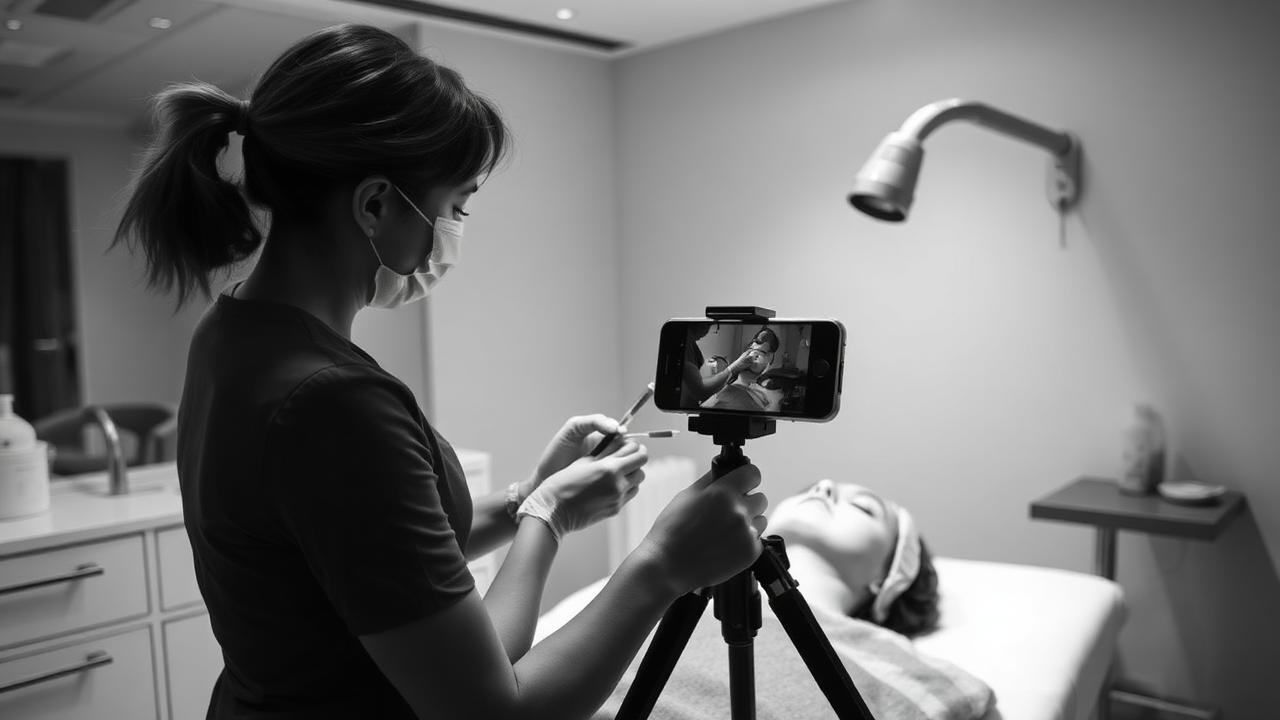
Make filming part of the workflow. Don't treat social media as a separate project. Build it into the treatment process. One staff member holds a phone for 30 seconds during a Botox injection. Before-and-after photos at every follow-up visit. A provider records a quick talking-head clip between clients. This takes seconds, not hours.
Remove the editing bottleneck. Editing is where 90% of medspas give up. The footage sits in camera rolls for weeks. Nobody has time to open a video editor, cut the clips, write a script, add music, add captions, and export for four different platforms. That's why it doesn't get done. Send raw footage to ReelsDoc on Telegram and the AI handles scripting, editing, voiceover, captions, music, branding, and publishing. Under five minutes from raw to published on TikTok, Instagram, YouTube, and Facebook. Up to five staff members can share the same bot, so whoever films can send it directly.
Batch your approvals. Review finished videos once a day. Morning coffee or end of day. Approve the ones that look good. Request changes on anything that needs adjusting. Fifteen minutes and your week's content is handled.
Stop waiting for perfection. A slightly shaky video of a real Botox treatment in your actual treatment room will outperform a perfectly lit stock photo every time. Patients want to see real. Plastic surgeons face the same production challenge and the ones who solve it are the ones booking consultations from social media.
The Cost of Medspa Social Media Management
Every option, broken down.
Full-service social media agency: $3,000-6,000/month. You get strategy, content creation, and posting. Usually 12-20 posts per month. Professional quality if the agency is good. But multi-week onboarding, days of turnaround per post, and constant back-and-forth on approvals. For a single-location medspa, this is a significant monthly expense for content that takes months to show ROI.
In-house social media manager: $3,500-5,000/month. A dedicated person who knows your brand and your treatments. Great in theory. But you're paying a salary, benefits, and dealing with turnover. When they leave, your social media stops until you hire and train someone new. Most single-location medspas can't justify a full-time hire for this.
Overseas freelancer: $500-1,500/month. The cheapest option on paper. But you get generic output. Canva templates. Stock photos. Content that looks like every other medspa's feed. Months of teaching them about your treatments before they produce anything that reflects your practice. And the communication lag: emails, WhatsApp messages, revision requests that take days.
Doing it yourself: your time. You're a provider or a practice owner. Your time is worth hundreds of dollars per hour when you're treating clients. Spending three hours a week editing videos in CapCut is the most expensive option when you calculate the opportunity cost. And it's not sustainable. You'll stop within a month.
Staff handling it: inconsistency guaranteed. Your front desk or treatment coordinator posts for a week. Then a busy Monday happens. Then a vacation. Then it never comes back. Even when they do post, the gap between raw phone footage and professional content is visible.
AI-powered production: less than lunch. This is the option that didn't exist two years ago. AI handles the editing, the scripting, the voiceover, the captions, the music, and the publishing. Your only job is filming 30 seconds of what you already do. ReelsDoc does this for medspas specifically, with features like blood detection, device recognition, and voice cloning built in for aesthetic practices.
Getting Started
Film one treatment. Send it. See what happens.
You don't need a content strategy deck. You don't need a brand photoshoot. You don't need to hire anyone.
Film a Botox treatment tomorrow. Or snap a before-and-after of a microneedling client. Or record 30 seconds of yourself talking about the most common question clients ask you.
Then send it to ReelsDoc on Telegram and see what comes back. The AI scripts it, edits it, adds voiceover, captions, music, and your branding. Under five minutes from raw to published on TikTok, Instagram, YouTube, and Facebook. 5 free videos, full experience, no credit card.
That's it. One treatment. One video. One message. And you'll see exactly how medspa social media marketing works when the production bottleneck disappears.
Frequently Asked Questions
What should a medspa post on social media?
The content that performs best for medspas is real treatment footage: Botox and filler injections, microneedling sessions, laser treatments, chemical peels, and body contouring procedures. Before-and-after transformations are the most saved and shared content type in aesthetic social media. Provider expertise clips where your injector talks to camera about treatments build trust faster than any other format. The key is posting real content from your actual treatment rooms, not stock photos, not Canva templates, and not AI-generated imagery. Every treatment you perform is a piece of content waiting to be posted.
Which social media platform is best for medspas?
TikTok drives the most new client discovery for medspas because the algorithm shows aesthetic content to people who are actively watching it, regardless of whether they follow you. Instagram is where clients go to verify your credibility before booking, so a consistent, recent feed is critical. YouTube ranks for treatment-related search queries and builds visibility over time. Facebook reaches the older demographic with the highest treatment budgets. If you can post to all four, do it. ReelsDoc publishes to TikTok, Instagram, YouTube, and Facebook from a single Telegram message.
How do I post treatment footage without getting flagged on Instagram?
Blood and needles trigger automated content moderation on Instagram and TikTok. The most reliable approach is converting injection and procedure footage to black-and-white, which reduces the visual impact enough to pass moderation while still showing the treatment. ReelsDoc does this automatically by detecting blood in footage and converting those sections to black-and-white. Before-and-after photos of healed results, provider talking to camera, and office content can be posted in full color without any risk.
How much does medspa social media marketing cost?
A full-service agency charges $3,000-6,000 per month. An in-house social media manager costs $3,500-5,000 per month in salary. An overseas freelancer runs $500-1,500 for generic output that doesn't reflect your brand or understand your treatments. AI-powered production with ReelsDoc costs less than lunch per day and handles everything from editing to publishing across four platforms. 5 free videos to start, no credit card required.
How often should a medspa post on social media?
Three to four times per week is the minimum for visibility. Daily is better. The medspas that see clients mention social media as their discovery source are the ones that post consistently for months. Consistency matters more than perfection. The algorithm rewards regular posting and penalizes long gaps. The challenge for most medspas isn't creating enough content since they perform treatments every day. The challenge is the production pipeline from raw footage to published post. Remove that bottleneck and consistency becomes automatic.